

Blog

From Data Fabric to Trusted AI: Why OWL/RDF and Formal Ontology Matter
A graph can tell you that two things are connected.
It cannot tell you what that connection means.
That distinction is where most data strategies break down—especially as organizations push toward AI.
Contemporary Data Fabric platforms are powerful for integrating and accessing data. But without a formal semantic layer, they leave meaning implicit and interpretation inconsistent.
This is why OWL/RDF and formal ontology matter. They turn data into machine-understandable context, enabling explainable, trustworthy AI instead of educated guesses.
AI Does Not Solve Ambiguity. It Scales It.
A phrase like “C-UAS mission” can mean very different things to different stakeholders. That ambiguity is not just a language problem — it is a governance and execution problem. In the age of AI, unresolved meaning does not disappear. It gets scaled, accelerating poor decisions unless organizations establish a durable, machine-understandable semantic foundation.
When Coordination becomes the Engineering Problem
Major initiatives often pull attention toward hardware, but the hardest engineering problem frequently lives between the components: coordinating independently built systems — governed by different rules and evolving on different timelines — into one reliable outcome. When meaning stays implicit, integration becomes brittle and the execution gap widens. Engineering a coherent system of systems requires treating the seams as infrastructure: shared context, governance, and verifiable execution that aligns intent to action even as requirements change.
From Federated Data to Governed Execution
The Intelligence Community Data Reference Architecture (IC DRA) stabilizes federated meaning across distributed domains — but interoperable data alone is not enough. Modern mission and engineering ecosystems require governed execution: coordinated action under policy, authority, and audit constraints. This article explores how operationalizing federated semantics through a knowledge layer and execution fabric enables bounded autonomy and mission-aligned outcomes across DoD, IC, and digital engineering environments.
From Fragmented Data to Governed Execution
Fragmented lifecycle data is the real drag on defense and aerospace modernization. Crown Point’s semantic data fabric for Digital Threads turns disconnected artifacts into governed operational context, enabling traceable decisions, faster change cycles, and scalable, policy-bounded automation.
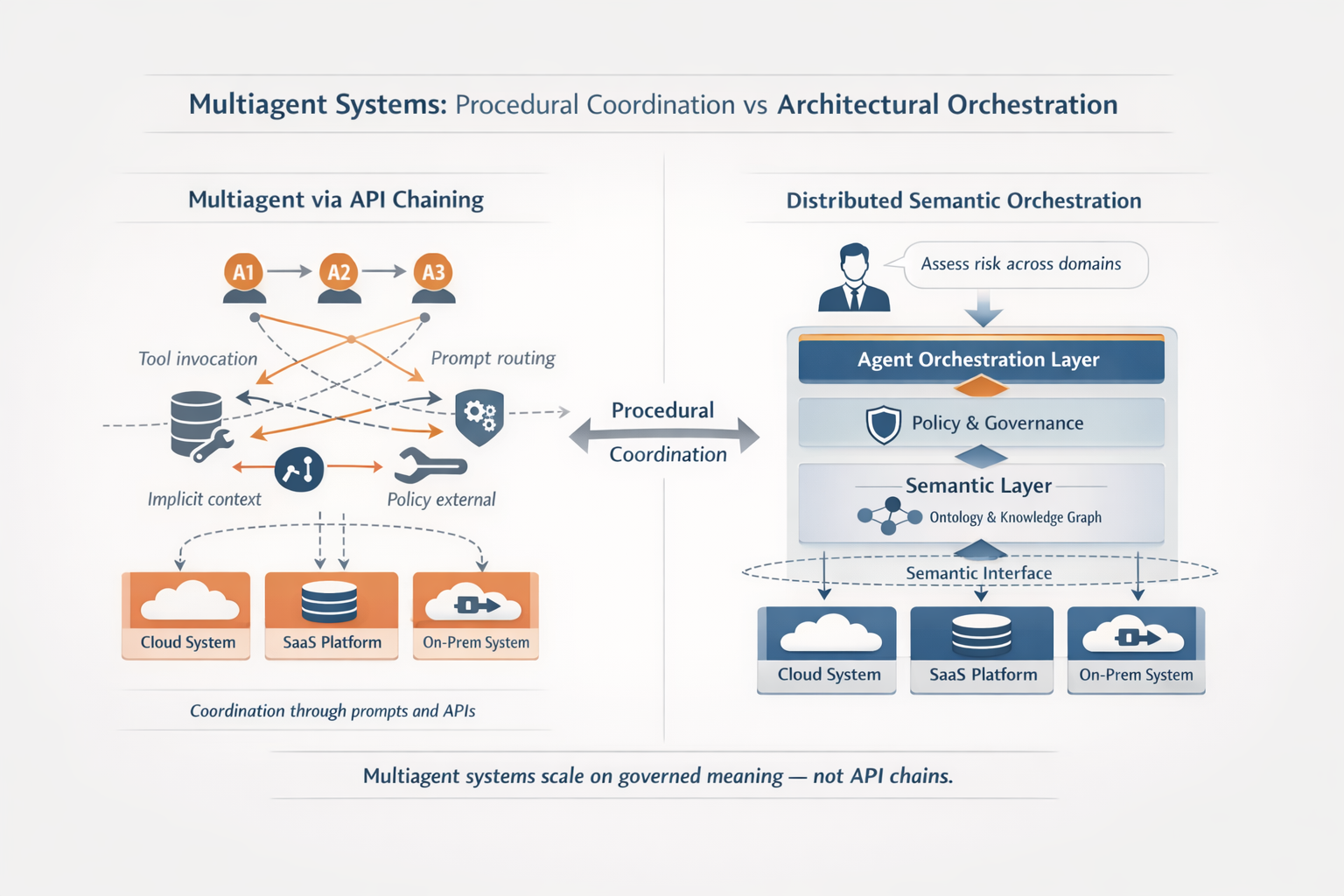
Multiagent Systems Will Scale … On a Distributed Semantic Substrate
Gartner highlights the rise of multiagent systems, but scaling enterprise AI requires more than API chaining and tool invocation. This article explores how distributed semantic substrates, knowledge graphs, and policy-governed orchestration enable bounded autonomy and trustworthy AI across complex, distributed enterprise environments.
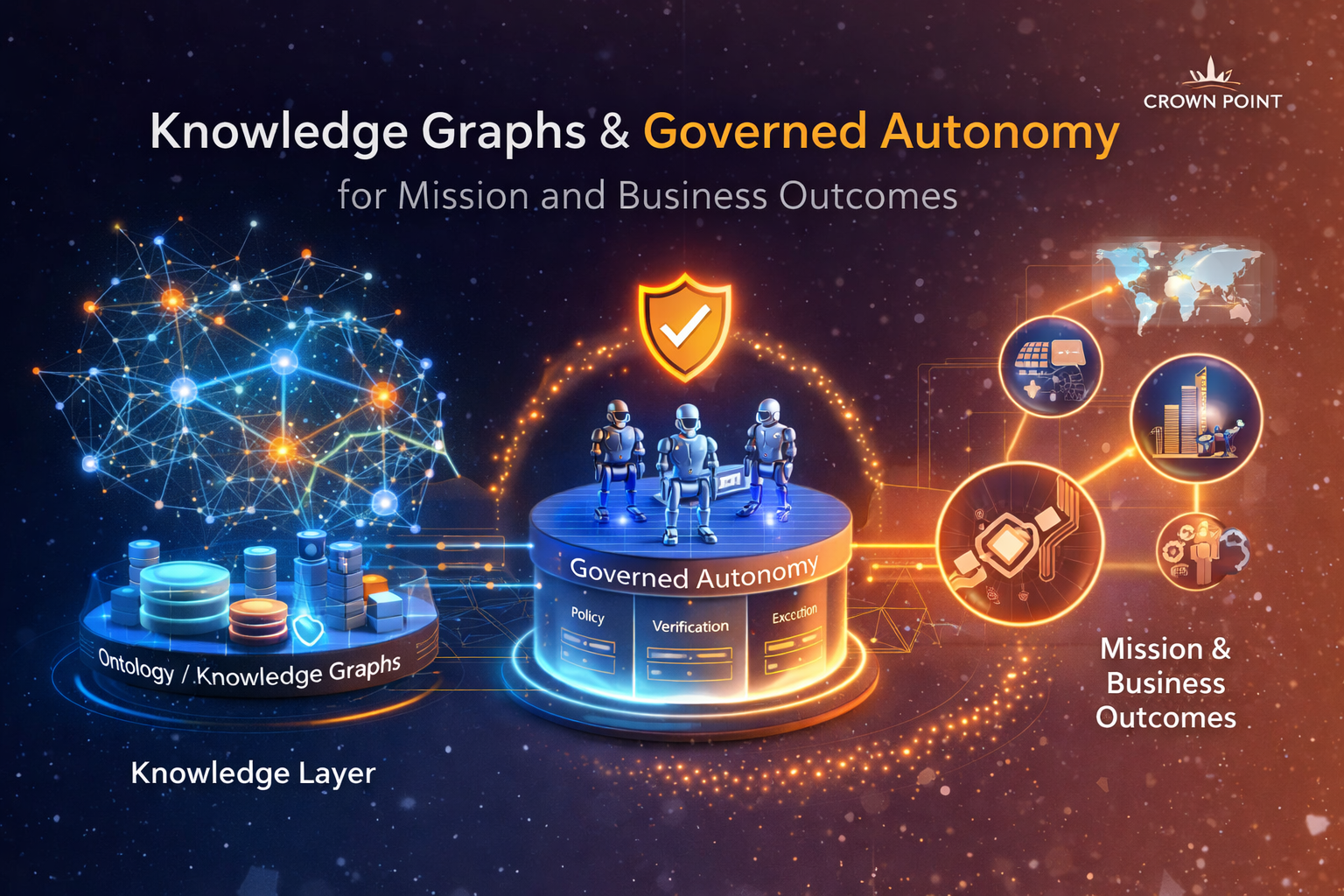
KCEF: Governed, Meaningful Autonomy for Mission and Business Outcomes
KCEF turns heterogeneous data and systems into actionable context and governed autonomy, so AI and agents can support decisions and execute workflows with policy guardrails, verification, and audit-ready traceability. Instead of “more AI” creating more risk, KCEF makes autonomy reliable, accountable, and outcome-driven.

Revisiting the Semantic Web Vision (in the Age of GenAI)
The Semantic Web didn’t fail; it arrived early. In today’s distributed enterprise, GenAI has made its core ideas urgent: shared meaning, stable identifiers, provenance, and grounding across systems you can’t (and shouldn’t) centralize. This post revisits what the Semantic Web got right, what held it back, and how semantic endpoints plus federated access patterns make the vision practical for trustworthy AI and governed execution.
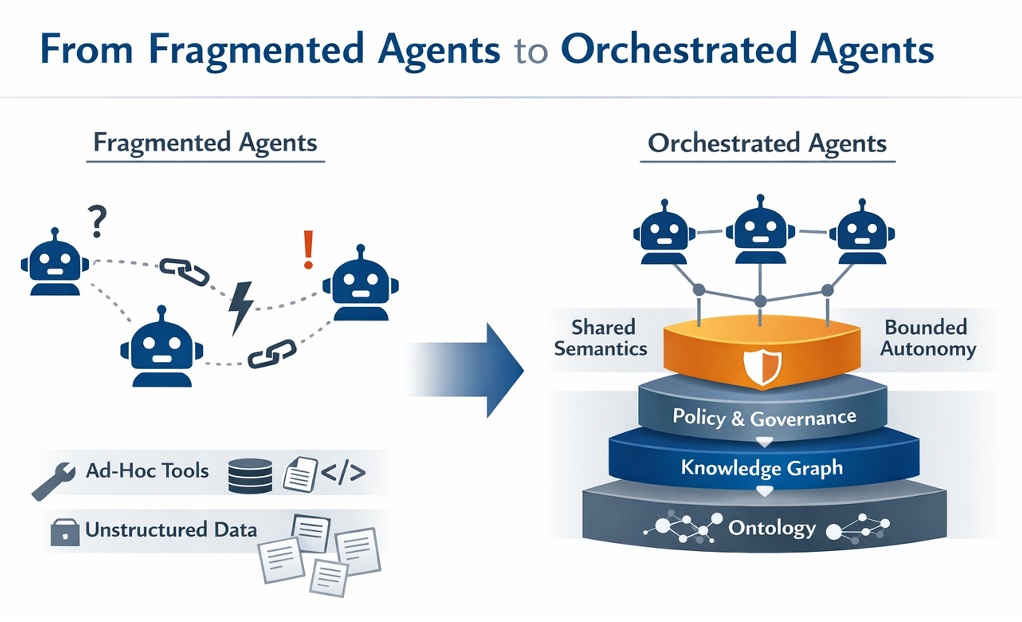
Agent Orchestration: From Semantics to Governed Autonomy
Agent systems are resurging. But without shared semantics and governance, they risk becoming brittle, untrustworthy automation layers. This article explores how knowledge-centric architecture enables true agent orchestration, bounded autonomy, and mission-aligned execution; and why the real breakthrough is architectural, not just model-driven.
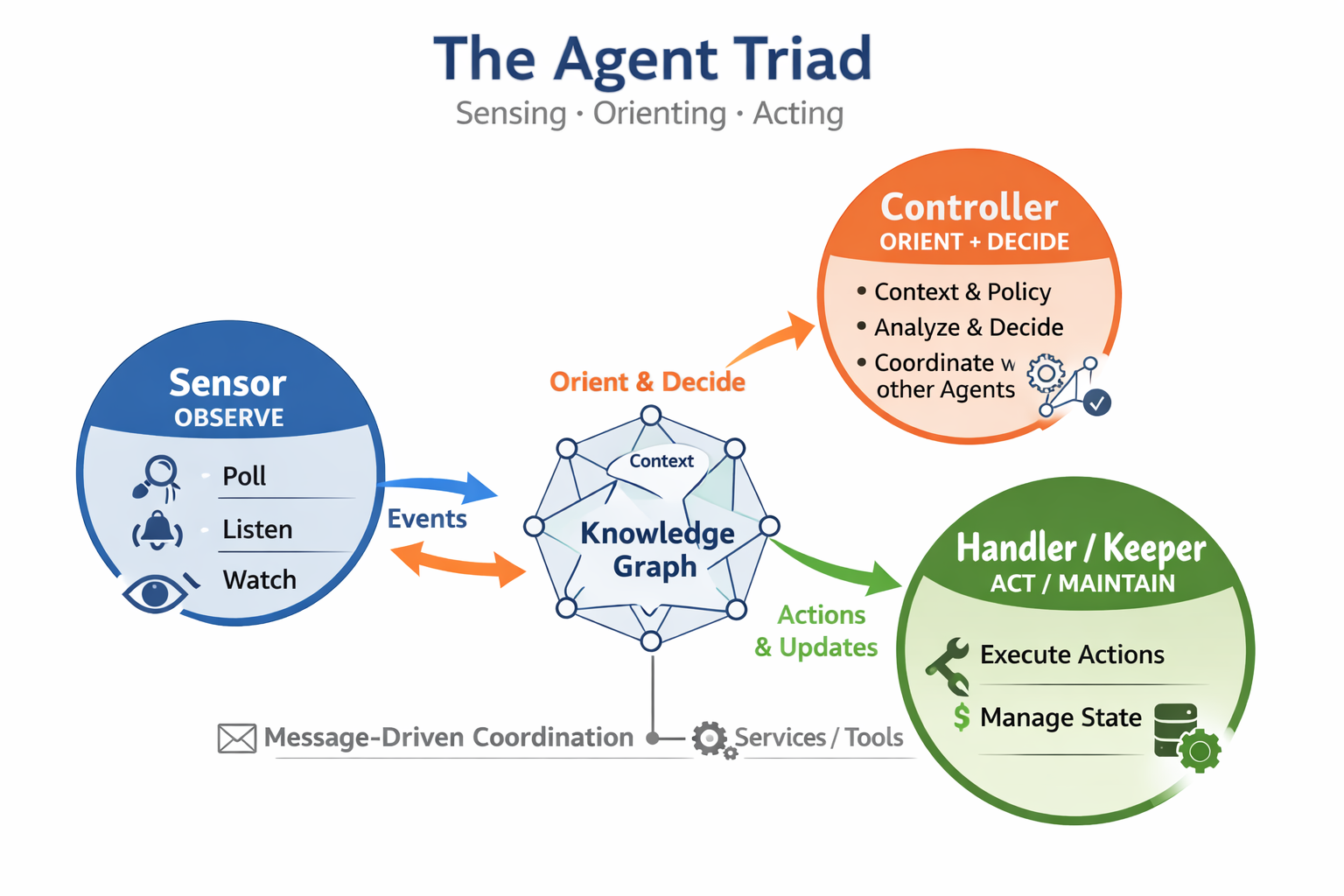
The Agent Triad, Re-stated for Modern Agent Systems
A modern framing of the Agent Triad pattern – Sensor, Controller, and Handler/Keeper – showing how knowledge graphs strengthen the “Orient” phase (OODA) and how message-driven agents differ from method-oriented services to enable scalable agent societies.
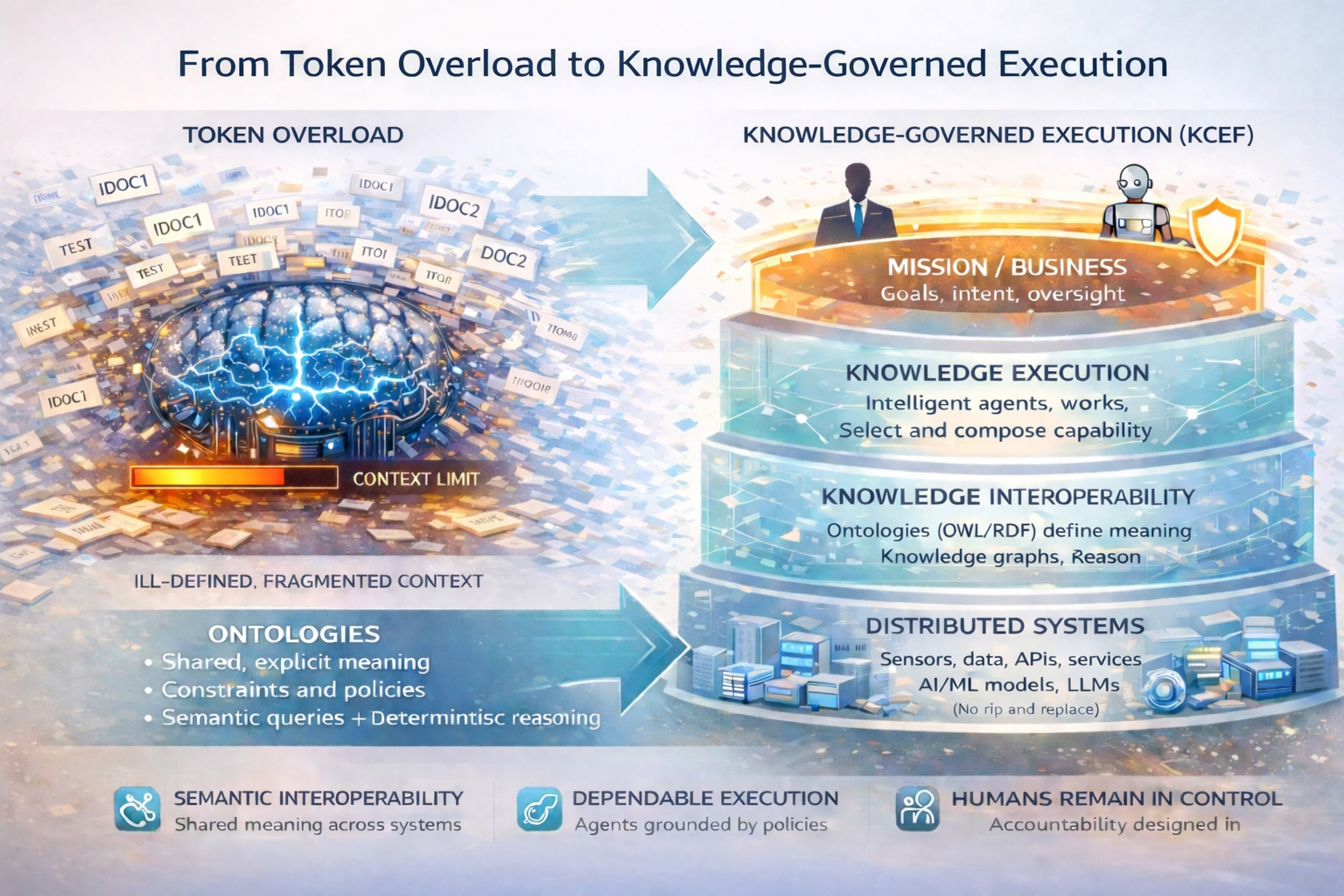
From Token Overload to Knowledge-Governed Execution: Ontologies as the Interoperability Layer in KCEF
We’ve moved from information overload - humans overwhelmed by documents - to token overload, where LLMs are constrained by bounded context windows. The recurring symptoms (truncation, attention dilution, inconsistency, hallucination) are often treated as model problems, but they’re better understood as architectural problems.
This post frames Crown Point’s Knowledge-Centric Engineering Framework (KCEF) as that missing foundation. By using ontologies and knowledge graphs to make meaning explicit, shared, and governable, KCEF creates a knowledge interoperability layer that enables semantic alignment across systems; so agents can reason over durable context and execute within policy, provenance, and human oversight.